Trezor Login: Secure Access to Your Crypto Wallet
Everything you need to know about logging into your Trezor wallet safely and efficiently.
Introduction: The Gateway to Secure Crypto Access
Trezor Login is the entry point to your world of digital finance — a world where your assets are fully controlled by you. With the rise of cryptocurrencies, secure access has become as crucial as the coins themselves. Whether you’re logging in to manage your Bitcoin, Ethereum, or other assets, Trezor ensures that your funds remain protected behind top-tier hardware encryption and a user-friendly interface.
In this comprehensive guide, we’ll walk you through every step of logging into your Trezor wallet, explain how it connects with Trezor Suite, and share best practices for keeping your wallet and passphrase secure.
🔐 Why Trezor Login Matters
Every time you log in to your Trezor wallet, you’re authenticating a gateway that stands between your crypto assets and the rest of the internet. The login process ensures that your private keys never leave your device — even when connected to a computer or mobile phone. This process eliminates the risk of phishing or keylogging attacks that often compromise online wallets.
- Private Key Security: Stored inside your Trezor device and never exposed online.
- Human Verification: Trezor ensures that only physical confirmation can authorize transactions.
- End-to-End Encryption: Protects communication between Trezor Suite and your device.
Step-by-Step Guide to Trezor Login
Step 1: Connect Your Trezor Device
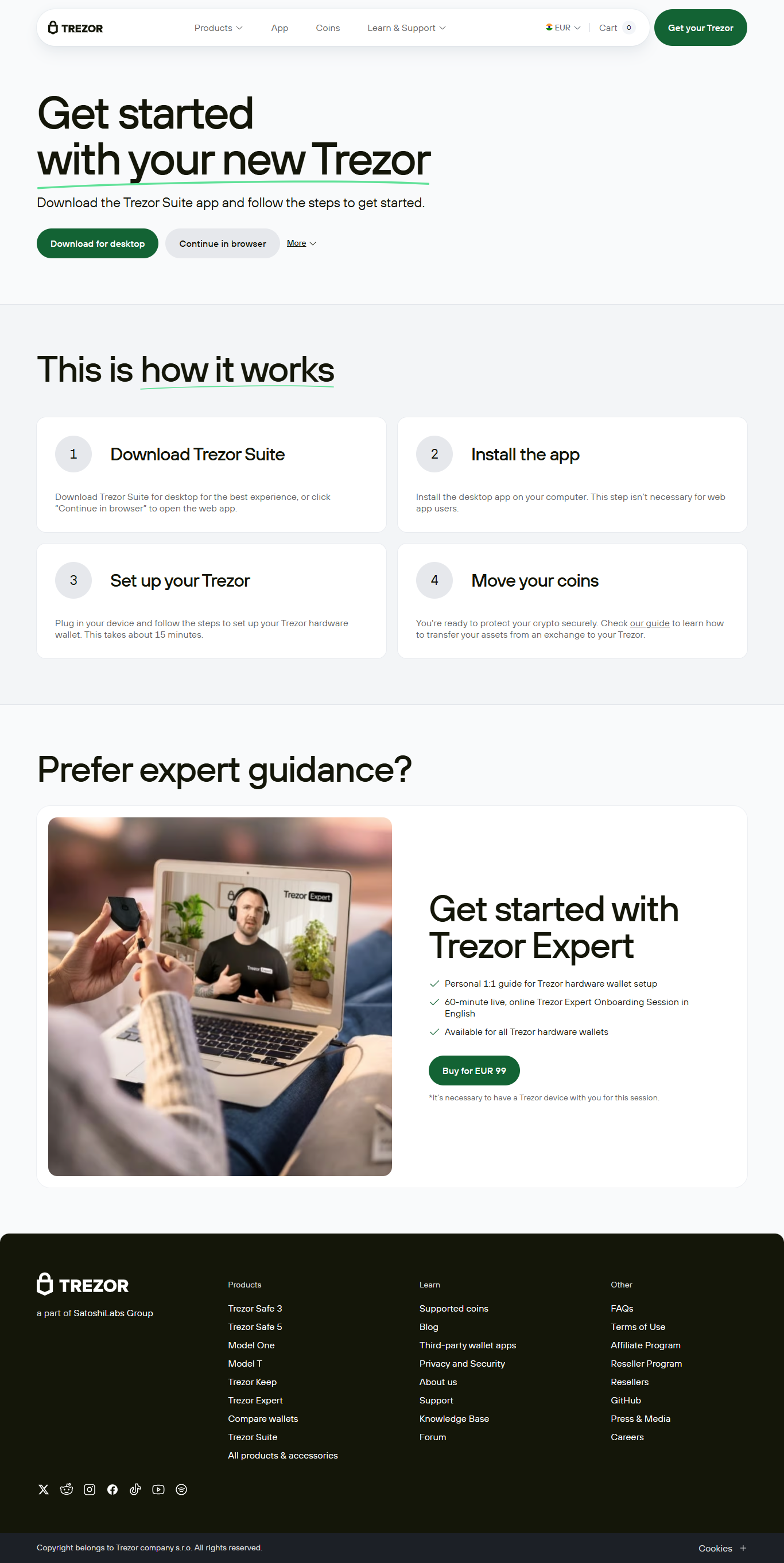
Plug in your Trezor Model One or Model T via USB. Ensure the cable is properly connected and your device turns on. The display should show the Trezor logo and a prompt to connect.
Step 2: Open Trezor Suite
Go to the official Trezor Suite application on your computer or open it from your browser (if supported). Trezor Suite is the dashboard for managing your coins, tokens, and transactions securely.
Step 3: Authenticate and Confirm
Enter your PIN directly on your Trezor device, following the randomized keypad displayed. If you use a passphrase, type it securely to complete authentication. You’ll then be redirected to your wallet dashboard.
Common Login Issues & Fixes
| Issue | Possible Cause | Solution |
|---|---|---|
| Device not detected | Loose USB connection or outdated drivers | Try a different cable/port, reinstall Trezor Bridge |
| PIN not accepted | Incorrect entry or changed keypad pattern | Recheck the device screen and enter again |
| Passphrase rejected | Mismatched or mistyped passphrase | Ensure exact phrase spelling and casing |
How Trezor Login Protects Your Crypto
The Trezor login process is designed around the principle of zero trust. Unlike centralized exchanges that store your credentials on their servers, Trezor ensures you alone have access to your private keys. Even if your computer is compromised, the attacker cannot access your funds without physical access to your Trezor device.
“In crypto security, control equals safety. Trezor’s login design ensures that only you can authorize any access or transaction.”
Tips for Safe and Smooth Login
- Always verify you’re using the official Trezor Suite or the official Trezor URL.
- Regularly update your device firmware and Trezor Suite to the latest version.
- Never share your recovery seed or passphrase with anyone.
- Keep your device disconnected when not in use to minimize exposure.
- Use a secure, malware-free computer for all crypto interactions.
Understanding Trezor Suite Login Integration
The login process is not just about authentication — it also syncs seamlessly with Trezor Suite, your all-in-one crypto management platform. Once logged in, users can view real-time portfolio data, send or receive assets, manage tokens, and explore the DeFi space with confidence.
Trezor Suite supports over 1,000 coins and tokens, giving users full control from one interface. Each login session is secured with end-to-end encryption, ensuring that every transaction request must be physically verified on your Trezor device.
Frequently Asked Questions (FAQ)
1. Can I log in to Trezor without the device?
No. Your Trezor hardware wallet is required for authentication. Without it, you cannot access or sign transactions, ensuring no one else can log in on your behalf.
2. What if I lose my Trezor device?
If your recovery seed is safely backed up, you can restore your wallet on a new Trezor or any compatible wallet using that seed phrase.
3. Is the login process different for Trezor Model T and Model One?
The steps are similar, though Model T features a touchscreen for PIN and passphrase entry, while Model One uses a combination of the computer interface and device buttons.
4. Can I use Trezor Login on mobile?
Currently, full login functionality is available through desktop interfaces. Mobile support is limited but expected to expand in the future.
Conclusion: Trezor Login — Your Key to Digital Security
Trezor Login isn’t just a step in accessing your crypto wallet — it’s a symbol of self-sovereignty in the digital world. By using Trezor, you take full ownership of your financial future, safeguarding your assets from cyber threats while maintaining total control. Always stay vigilant, keep your seed phrase safe, and trust your device — because with Trezor, you are your own bank.